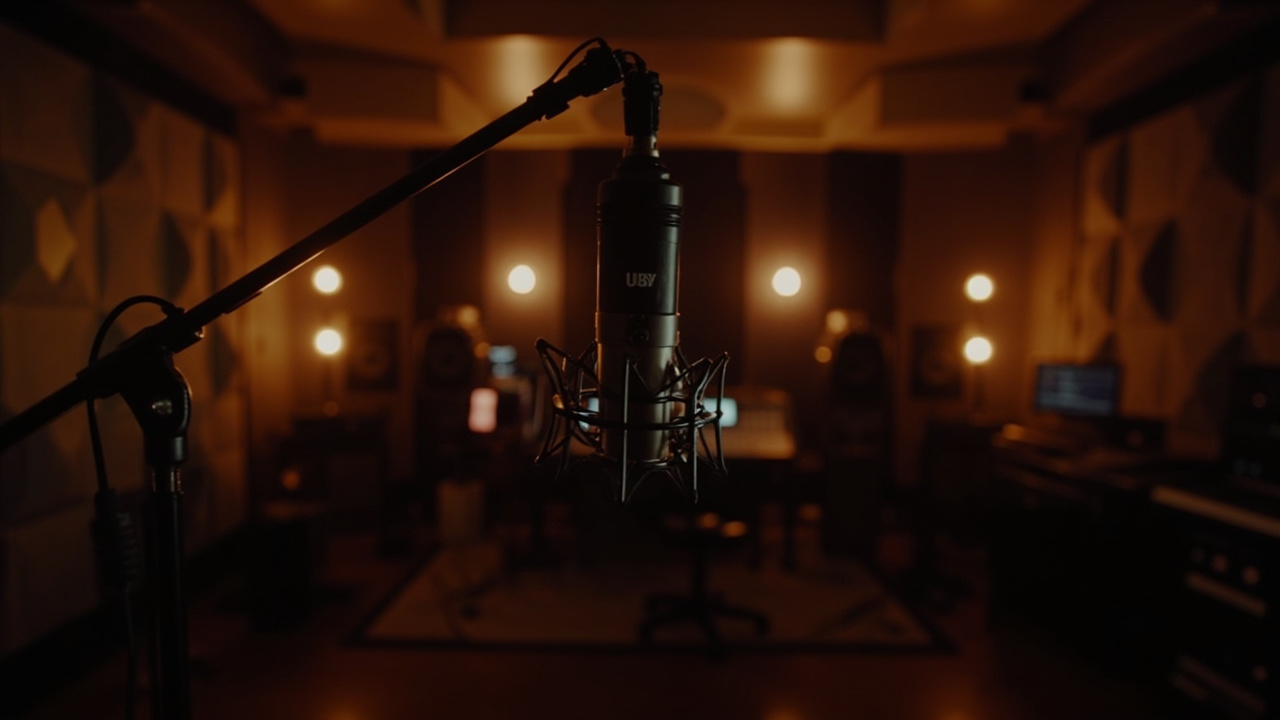
When a voice actor says "I have a professional studio," it can mean anything from a purpose-built recording environment with Neumann microphones and acoustic treatment, to a spare bedroom with a decent condenser mic and some foam panels on the wall.
Both might technically qualify. But the audio they produce is not the same — and the difference matters for professional productions.
This piece is for producers, casting directors, and creative leads who need to evaluate whether a remote voice talent's studio actually meets the standards their project demands.
The Core of a Professional Voice Studio
A professional voice recording studio has three non-negotiable components: acoustic isolation, microphone quality, and signal chain integrity. Everything else is enhancement, but these three are the foundation.
Acoustic Isolation
The room needs to be treated — not just "quiet." Professional acoustic treatment means panels designed to control reflections, absorb ambient noise, and create a clean acoustic environment where the voice captures without coloration from the space. A spare room with foam on the walls is not acoustic treatment. It's noise reduction.
The standard in professional voice recording is modular acoustic panel systems — companies like Studio Bricks, Primacoustic, or equivalent — installed in a dedicated room or booth. This is what delivers the "dry" and clean sound that post-production teams need to work with.
Microphone Quality
The industry standard for professional voice recording is the Neumann U87 Ai. It's been the reference microphone for broadcast and commercial voice work for over 50 years. It's not the only quality microphone — there are excellent alternatives from Schoeps, Sony, and others — but the U87 is the benchmark that production teams recognize worldwide.
Any professional voice studio should be transparent about their microphone and able to explain why they chose it. If a voice actor can't tell you what microphone they're recording with, that's a signal.
Signal Chain Integrity
The path from microphone to file — preamp, interface, conversion — needs to be clean. The industry standard interfaces for voice work include Universal Audio Apollo series, Apogee, RME, and similar. These aren't consumer-grade products. They're studio-grade conversion systems that ensure the audio that reaches the recording software has minimal noise and accurate dynamics.
What Production Teams Actually Need
From a production perspective, here's what a professional remote voice studio should deliver:
- Recording-ready audio: Clean WAV files with no ambient noise, no room tone problems, no plosives or sibilance issues beyond what can be cleanly edited. The audio should require minimal post-production correction.
- Low-latency monitoring: For live-directed sessions, the talent needs to hear the director without hearing their own voice through the recording chain. This requires an interface with proper monitoring routing and near-zero-latency monitoring — typically via Source-Connect or equivalent.
- File delivery in industry-standard formats: 44.1kHz or 48kHz, 16 or 24-bit WAV files as the default. MP3 for reference only, never for final delivery.
- Fast turnaround: Professional talent with a professional setup should be able to deliver same-day audio for urgent projects, with clean edits and organized takes.
Evaluating a Remote Studio: Questions to Ask
Before booking a remote voice session, ask these questions:
- What microphone are you recording with?
- What acoustic treatment does your room have?
- What interface are you using?
- Are you Source-Connect certified (or equivalent for live-directed sessions)?
- Can you provide a short test recording against a sample script before the session?
- What's your typical turnaround on a finished, edited file?
A professional voice actor will answer all of these questions directly, without defensiveness. If someone is reluctant to discuss their equipment, that's information. It doesn't necessarily mean their setup is inadequate — but it makes evaluation harder.
Professional Setup vs. Make-Shift Setup
Why It Matters for Your Production
The quality of the voice studio directly affects your post-production cost and timeline. Audio that arrives clean and recording-ready can be placed directly into the edit, with minimal processing. Audio that arrives with room noise, plosives, or inconsistent levels requires corrective processing — and that takes time, which costs money.
More importantly: the voice performance itself is shaped by the studio environment. A voice actor recording in a properly treated space with professional-grade equipment performs differently than one working in a compromised environment. The room affects how you hear yourself, which affects how you deliver. It's subtle, but it compounds across an entire session.
For high-stakes productions — premium brand campaigns, film and television dubbing, long-form e-learning — the studio is part of the creative infrastructure. It's not a commodity. It's a quality variable.
The Bottom Line
When a production company books remote voice talent, they're not just buying a voice. They're buying a complete recording environment. The quality of that environment determines the quality of the audio that arrives — and the quality of the audio affects how much post-production work is required before it's ready to use.
Ask the questions. Request a test recording. Verify the setup before committing to a large project. A professional voice actor will welcome the process, not resent it — because they know that quality is what they're selling.